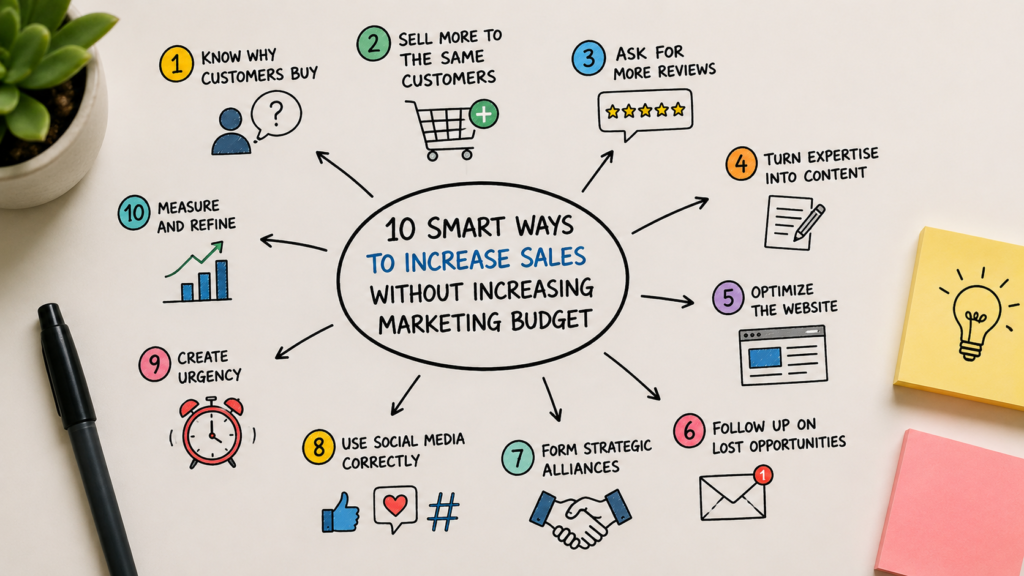
Increasing sales is one of the most common goals for any business, but the first reaction to revenues that stop growing is an increased advertising budget. While more promotion may bring more customers, the real opportunities to increase sales are sometimes closer than a business expects – within the current customers’ experience and the existing marketing campaigns.
For a small business, this reality is particularly important: the marketing budget is significantly lower than that of a large corporation, and the ability to compete with them is achieved through optimizing relationships with the current customers and using the audience’s characteristics. In 2026, such tools as artificial intelligence enable small businesses to scale and analyze customer service, marketing, communications, and various other operations. According to the report by the Federal Reserve Bank of San Francisco, almost 40% of the surveyed small businesses already utilize or plan to use AI for marketing, communication, productivity tools, and analytics.
Below are ten ways small businesses can find additional sales without increasing the marketing budget.
1. Know Why Customers Buy What They Buy
Before attracting new customers, it is essential to analyze the current ones’ experience with the brand. What do they buy? Why do they buy from this particular company? What differentiates it from competitors? The answers may not be obvious at first, but each detail reinforces the importance of personalized services and transparent communication.
Instead of generic statements, such as “we offer high-quality services,” it is vital to define and advertise the unique selling points (USP). In most cases, the customers are looking for solutions to their problems, so addressing them directly with a specific offer will yield better results.
2. Sell More to the Same Customers
It is a common sight to see offers to buy additional products on websites after a customer adds a purchase to the cart. Small businesses can utilize this method and suggest their current clients with additional goods or services that complement their initial choice. If a customer buys a personal website, it is possible to offer maintenance services. If someone purchases a product, the small business can recommend accessories or spares. For companies, an additional service may save time and effort in completing a task.
3. Ask for More Reviews
Word of mouth is one of the most critical converters of any marketing campaign. After researching an unfamiliar brand, a prospective customer is highly likely to look for reviews before moving forward with a purchase. Therefore, it is essential to request feedback from the companies’ clients.
Review platforms are the best choice for small businesses to collect testimonials and subsequently use them for marketing purposes. Fake reviews and ratings should be avoided, but other satisfied clients can be incentivized to share their experience online. After that, the increased credibility and better SEO will result in higher conversion rates.
4. Turn Expertise into Content
Small businesses have an advantage over big corporations in one area: proximity. A local plumber knows the common issues with households and can turn this experience into engaging articles and videos. An accountant can advise on the typical mistakes in documentation, and a software developer can share tips on utilizing their product better. All of these materials will organically convert into leads once the prospect reaches out to the company.
5. Optimize the Website
A company may spend considerable resources driving traffic to its website, but it is vital to ensure that the visitors convert. To do that, the owner should analyze the user experience (UX) and optimize the most critical points: the value proposition, target audience, contact details, and call-to-action (CTA). The website’s accessibility is vital, so it is essential to ensure that the essential information is easy to spot on mobile devices and desktop computers alike. Sometimes, a small change in the heading or a more organized CTA section can improve the sales significantly.
6. Follow Up on Lost Opportunities
Not all website visitors convert into clients immediately. Some of them will inquire or fill out contact forms and wait for a call. Others may forget about the intended purchase, compare the services, or be too hesitant to make a choice. All of these situations can be revisited through a follow-up message or an email reminder.
It is crucial to retain politeness and avoid pressuring the client. A simple question about whether they still need the services or a helpful tip from the companies’ experts can be enough to prompt an action. If the small business has unique selling points that the prospect may find beneficial, the campaign has a good chance of working.
7. Form Strategic Alliances
Two small businesses are better than one, and it is especially true for companies that address the same target audience. Strategic alliances allow the partners to utilize each other’s audience and promote ongoing cooperation. Planners, caterers, and venues can cooperate with wedding photographers, web designers and developers can work with branding specialists, and personal trainers can team up with nutritionists. In most cases, such collaboration requires minimal overhead and produces sustainable results for all parties.
8. Use Social Media Correctly
Many companies try to use social media as traditional advertising, but the platforms are designed to keep users engaged. The best way to leverage the opportunities is to post helpful or entertaining content regarding the company. Product reviews, useful hints, lessons learned, and answers to the clients’ questions are a great way to reinforce the brand image and ensure that the audience thinks of the company first when they need the service.
9. Create Urgency
Sometimes, the small business owner may notice a highly interested lead that cannot decide whether to purchase the services. In such cases, it can be useful to offer a special condition to encourage the action. It does not have to be a substantial discount, but an additional hour of a specialist’s time, extra customer support, an informative guide, or a seasonal promotion.
10. Measure and Refine
Lastly, it is essential to remember that not every marketing effort is equal. Some activities, channels, or tactics bring more opportunities, repeat customers, and revenue, while others simply waste the company’s resources. It is vital to identify these patterns and refine the strategy consistently. Tools such as customer lifetime value (CLV) and customer acquisition cost (CAC) assist in defining the profitable actions, and artificial intelligence can automate the process.
According to IDC’s 2026 small and medium-sized business (SMB) outlook, the companies are now looking to transform the technology usage: from experimenting and discovery, they move to pragmatism and leverage. In other words, a small business owner should look at the collected data and determine the changes in customers’ behavior.
The Bottom Line
While increasing the marketing budget may seem like an easy way to attract more customers, a small business owner should first explore the possibilities within the existing opportunities. Understanding the current customers’ experience and preferences, optimizing the website, utilizing social media, and employing modern automation and analytics tools can yield better results than allocating more resources into the traditional marketing methods. At the same time, a more significant budget does not equal guaranteed sales: in 2026, companies compete through their superior efficiency in reaching out to the target audience and delivering the services that the clients genuinely need.
Written By: Editor Biztechtime