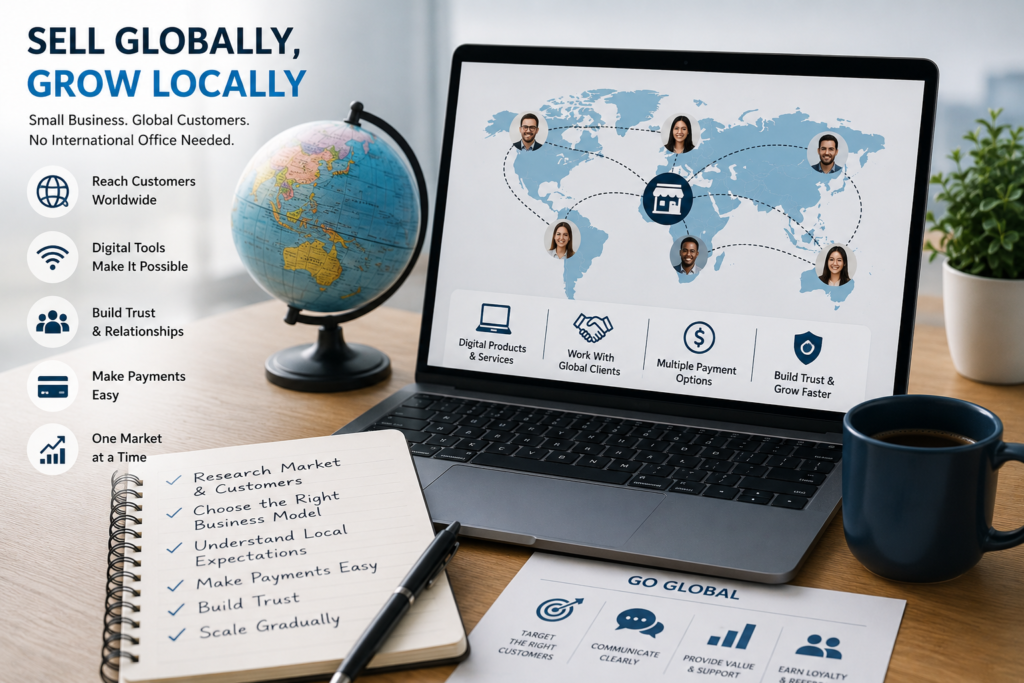
For a long time, it seemed like international expansion was only available to large companies. A company needed to have an office, staff, distributors, warehouses and significant funding before it could seriously consider selling in more than one country.
That dynamic has been changing in recent years due to the rise of digital business.
An entrepreneur can now base their operations in one country and serve clients on another continent. A consultant can work with overseas clients, a software company can sell their subscription services to customers in multiple countries, a designer can take on projects from around the world and an online retailer can sell their products through international digital commerce platforms. The International Council for Small Business refers to this trend as the rise of “micro-multinationals,” with small companies more likely to embrace international operations from the start due to the rise of digital tools, outsourcing and digital commerce.
It is worth noting that going international still requires careful consideration. Other countries tend to have different currencies, customer expectations, tax laws, regulations, languages and purchasing behaviors. The opportunities available to small businesses are nevertheless worth exploring, even if an entrepreneur cannot dedicate significant resources to the project.
For a small business, the key to international sales is to pursue one market at a time and look to gradually build on early successes.
Common Pitfalls for Small Businesses Going International
Entrepreneurs often make the mistake of deciding on a country before identifying the customer they intend to serve
Instead of saying “I want to sell in the United States,” consider which customer in that country has the problems your business solves.
For a small business, the more specific you can get about the customer, the more likely you are to understand the needs of that market. A software consultant could target small marketing agencies, a business writer could specialize in tech companies and a designer could focus on ecommerce sites.
Not all business models are conducive to rapid international expansion, but certain industries tend to embrace international sales more enthusiastically. These include digital products and services, software, online education, consulting, design and marketing, and some ecommerce niches.
Choose a Business Model That Travels Well
This is not to say that a small business that deals primarily with local customers cannot expand their operations, but entrepreneurs should be aware of the challenges they may face before making the leap.
Local customers will have varying expectations about the experience they have with a business, including prices, communication methods, convenience, customer service and other factors. In some cases, the way you write important documents can affect your ability to conduct international sales, as customers may have additional expectations about how companies communicate with them.
Before launching an international business initiative, carefully research the expectations of the local market and analyze what similar companies are doing. Pay attention to what different customers are saying about your competitors.
Research Local Customer Expectations
You want to understand the expectations of your target customers so that you can avoid major missteps. A local competitor may provide valuable insight into the strengths and weaknesses of your potential customers.
Another important consideration is how to facilitate sales. Customers considering a purchase from a foreign company may have additional concerns about currency, payment methods and overall value. In some cases, the difference in currency alone can discourage international customers from completing a purchase, especially if they are not aware of how to convert the amount into their local currency.
Entrepreneurs should research the payment methods used by their target customers and create a transparent system for customers to understand the value of their purchase. It is especially important for small businesses to carefully consider their pricing since they are likely to be compared directly to similar companies.
Finally, you should carefully consider how to build trust with potential customers. Individuals and businesses only buy from companies they know and trust, and that is harder for entrepreneurs to achieve if they have never met their customers in person.
Make Payment Easy
A professional website and general reputation are important tools in this effort, as is providing content that demonstrates your knowledge of your industry. For professional services, that could mean having samples of your work to demonstrate your skills. This is another area where small businesses can leverage their local presence, as they are likely to have a stronger connection to the communities in which they operate.
As these examples suggest, a small company can leverage their local presence to expand their operations overseas. You can work with local customers, employ local workers, partner with similar businesses and take advantage of the local economy before dramatically expanding your operations. At the same time, there are significant benefits to be had by a small company that builds the infrastructure and expertise to operate in more than one country.
Build Trust Before Asking for a Large Purchase
One of the biggest advantages of going international is the opportunity to work with other professionals. A small company usually has limited resources to hire full-time staff, but they can often find independent contractors and freelancers to handle more specialized tasks. That is particularly true in the digital space, where companies can work with designers, developers, translators, researchers and other experts on a per-project basis.
While you will need to carefully consider how to manage your remote employees, there are considerable advantages to be had by leveraging the international talent pool. This is particularly true in the short term, as independent contractors can usually complete a project faster than a company that has to recruit, train and then terminate full-time employees after completing a particular task.
There are other technology tools available that can help entrepreneurs with their international sales efforts, particularly artificial intelligence. AI can be used to facilitate communication across languages and assist with a range of other tasks, including research and administration.
Use Remote Talent Carefully
The value of AI should not be overestimated, however, as there are still some limitations to what AI can accomplish, particularly in terms of cultural awareness. You should always have a human being review important content to ensure that it is appropriate for the target audience.
The overall point is that small businesses can take advantage of a broad range of tools and technologies to facilitate international sales.
These include digital marketing, digital business tools, remote and independent workers and AI-powered tools for everything from customer service to research and administration.
That said, most experts agree there is no single technology that transforms small business owners into international business executives. According to the JPMorganChase Institute, newer small businesses are embracing AI at a rapidly increasing rate, but the OECD notes that most small and medium sized enterprises continue to use off-the-shelf AI tools rather than invest in more comprehensive AI strategies.
Do Not Expand Into Too Many Markets at Once
At the very least, this suggests that small businesses taking on international sales for the first time should take advantage of the AI tools that are available to them while building a comprehensive strategy that leverages their strengths.
Some small businesses make the mistake of trying to sell to everyone at once. A small business launches a social media campaign in ten countries, has their website translated into six languages and launches a marketing initiative that spans multiple continents without really knowing if anyone is interested in purchasing their products.
A far better option is to pursue one market at a time and focus on understanding that market before attempting to launch a similar initiative in another country. Build a small sales team and set a realistic timeline for your international launch before making the leap.
If the results are positive, you can use that as a launching pad for additional international sales, but it is critical to understand what worked and what did not before moving on to the next market.
The Opportunities for Small Businesses Are Growing
Small businesses have more opportunities than ever to sell their products or services to customers overseas, but international business still requires a certain level of caution and expertise. Experts indicate that international commerce is an area of particular interest for small businesses, which is understandable given the opportunities it provides. According to the 2026 global outlook on small and medium sized enterprises, geopolitical uncertainty, supply chain and digital transformation are among the key issues shaping the global economy and affecting small businesses around the world.
In short, it is a good idea to understand the particular risks of international sales before assuming you are ready to pursue customers overseas. A shipment of goods can be disrupted by geopolitical issues, while businesses that provide services must understand the nuances of international contracts and payments. Companies that deal with sensitive customer data need to have appropriate security measures in place as well.
The opportunities are significant for small businesses that know how to navigate the challenges of international sales. You do not necessarily need an office in London, New York, Dubai or Singapore to pursue customers overseas. Digital tools have made it possible to launch an international sales initiative from a much smaller budget. Small business owners should always adopt a gradual approach, however. You should identify your customer, pick a business model that supports international sales, conduct your own research and due diligence, make the purchase process as simple as possible, build trust with your target customers and test the waters in one country before making a larger commitment.
The Bottom Line
It is important to note that some small businesses will be in a much better position to pursue international sales opportunities than others. Some products and services are more conducive to international sales than others, and a small company with strong digital tools will always have an advantage over a similar company that has to deal with brick and mortar limitations.
At the same time, the rise of micro-multi-nationals indicates that local companies can expect to encounter more international customers than ever before. The opportunities are available to those who understand how to navigate the challenges of international sales.
Written By: Editor Biztechtime